Some gatherings ask for celebration. Others ask for quiet, grace, and a setting that feels worthy of a life well lived. This guide to memorial boat services is for families who want an ashes-at-sea experience that feels personal, peaceful, and carefully handled from the first conversation to the final ride back to shore.
A memorial on the water is different from a traditional service in all the ways that matter. The pace is softer. The setting does some of the speaking. Instead of fluorescent lights and tight schedules, you have open air, room to breathe, and a private space to remember someone in a way that feels less formal and more deeply felt. For many families, that alone changes the entire experience.
Why families choose memorial boat services
For some people, the choice is obvious. Their loved one fished, sailed, watched sunsets, served in the Navy, or simply felt happiest near the water. For others, the decision comes from wanting something intimate. A private boat charter allows you to gather only the people who should be there, without the distractions and logistics that can come with larger venues.
There is also a practical side. Memorial boat services can be simpler to organize than many families expect, especially when an experienced charter team handles the route, timing, and onboard details. That support matters when emotions are high. You should not have to spend the day worrying about navigation, weather patterns, or where everyone is supposed to stand.
The trade-off is that a boat service requires more attention to conditions. Wind, waves, and timing all affect the experience. That does not make it harder. It just means the best memorial services are thoughtfully planned rather than rushed.
What a guide to memorial boat services should help you decide
The real purpose of a guide to memorial boat services is not to tell every family to do things the same way. It is to help you make good decisions around tone, timing, and comfort.
Start with the kind of experience you want. Some families want a very quiet ash-scattering ceremony with a brief prayer and a few moments of silence. Others want music, shared stories, flowers, and a sunset departure. Neither approach is more meaningful than the other. The right service is the one that reflects the person you are honoring.
You will also want to think about who is attending. A small group of immediate family may prefer a shorter, simpler charter. A larger multigenerational group may need more seating, easier boarding, shade, and a captain who understands how to guide the moment without intruding on it. Comfort is not a small detail here. It helps people stay present.
Then there is timing. Morning water can feel calm and reflective. Late afternoon and sunset often create a beautiful, glowing backdrop that many families find comforting. If your loved one had a favorite time of day on the water, that can be a meaningful place to begin.
Planning the ceremony with care
The strongest memorial charters are built around thoughtful details, not elaborate production. A short conversation with your charter provider should cover the essentials: the size of your group, the desired atmosphere, whether ashes will be scattered, whether flowers or a reading are included, and how much privacy you want.
This is also the time to ask about local rules and best practices. Ashes-at-sea ceremonies may involve distance-from-shore requirements and other operational details that your captain should understand clearly. Families should not be left guessing. A professional charter team will explain what is allowed, what is recommended, and what to expect on the day itself.
It helps to assign one family point of contact. That person can coordinate readings, music, or any personal items being brought onboard. Keeping communication simple reduces stress for everyone else.
If children or older relatives will attend, mention that early. The right boat setup can make a major difference. Easy boarding, stable seating, shaded areas, and onboard safety equipment all add comfort without changing the intimacy of the service.
What happens during an ashes-at-sea service
Most memorial boat services follow a gentle rhythm. Guests board, settle in, and have a few quiet minutes as the captain gets underway. Once the boat reaches the chosen area, the captain will position the vessel with care and explain the next step. From there, the family leads the ceremony.
That may include a prayer, a poem, a military tribute, a favorite song played softly, or time for each person to speak. Some families prefer structure. Others want silence until the moment feels right. A good captain knows how to support the ceremony without controlling it.
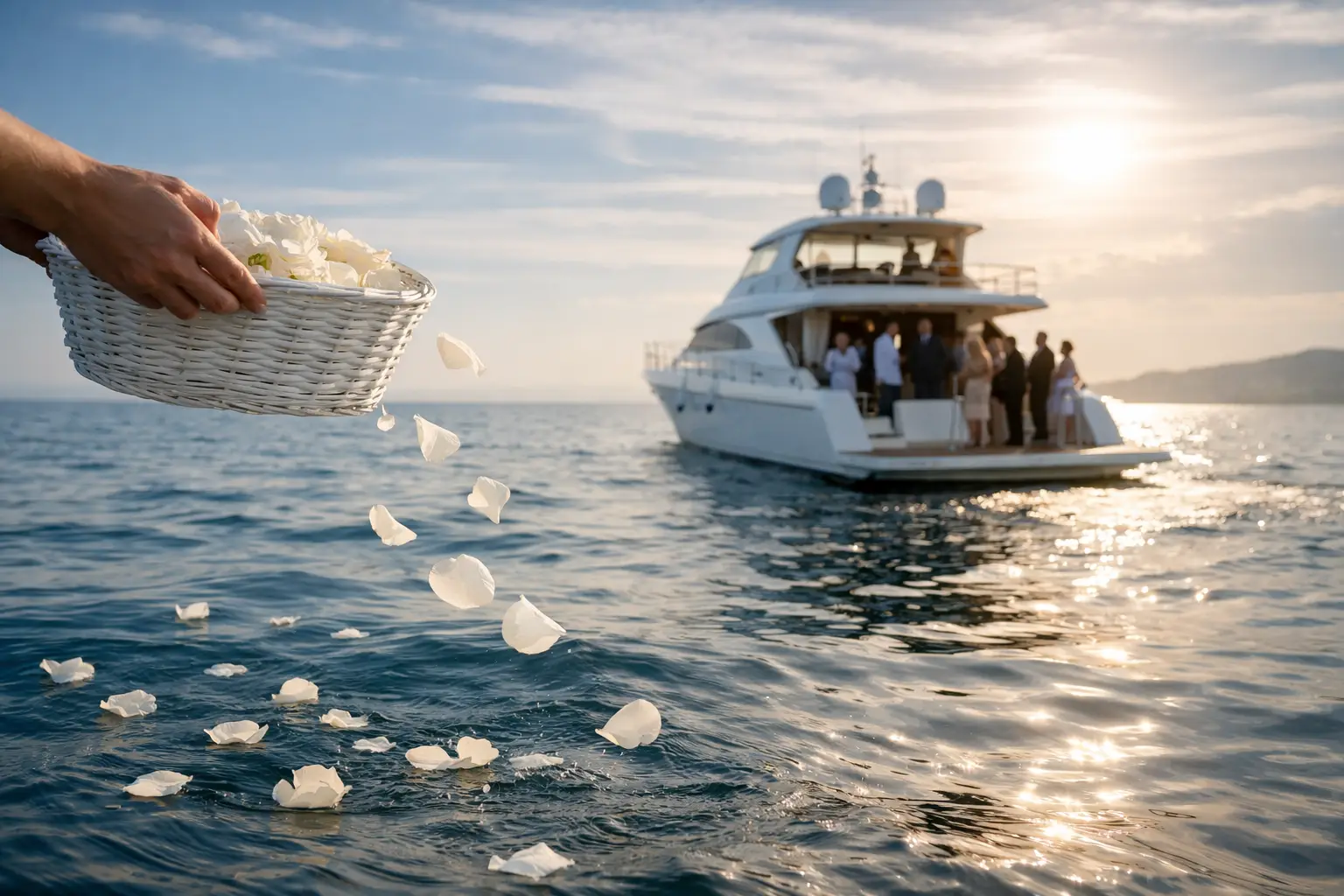
When ashes are scattered, the process should be unhurried and respectful. Some families release flowers afterward. Others ring a bell, share a toast, or simply watch the water for a few moments before returning. There is no need to fill every second. Often the most memorable part of the service is the stillness.
If you are unsure whether to include extra ceremonial elements, keep this simple rule in mind: choose only what feels true. A service does not become more meaningful because it is longer or more elaborate.
Choosing the right boat and captain
Not every charter is suited to a memorial service. This is one of those occasions where hospitality and professionalism have to work together. The boat should be clean, comfortable, and private. The captain should be experienced, calm, and able to read the room.
That matters more than flashy features. Yes, comfort amenities are helpful, especially on warm Florida days, but the real value comes from having a team that understands timing, discretion, and guest care. Families often remember the small things: a captain who speaks gently, helps older guests onboard, gives everyone space, and keeps the experience feeling steady and respectful.
Ask practical questions. Is the charter private? How many guests can come? Is there shade? Is the ride smooth for guests who may be nervous on the water? What happens if the weather shifts? A trustworthy provider will answer clearly and without pressure.
In Pensacola Beach and along the Florida Gulf Coast, the water can offer a remarkably beautiful setting for this kind of farewell. But beauty alone is not enough. You want a captain who knows the local conditions and can adjust the plan if needed so the day still feels peaceful.
Personal touches that make the service feel right
The most meaningful memorials usually include one or two personal elements rather than a long list of extras. A favorite song can say more than a full program. A brief story from a grandchild can land more deeply than a formal speech. A single flower placed on the water can be more moving than a large arrangement.
Photos can be part of the experience, but this depends on the family. Some want the memory documented. Others prefer complete privacy. There is no wrong answer. The key is deciding ahead of time so nobody has to make that call in the moment.
Food and drinks also depend on the tone of the charter. For some families, a light hospitality touch after the ceremony feels warm and comforting. For others, it may feel out of place. It depends on whether the gathering is centered on quiet reflection, shared remembrance, or a celebration of life.
If the service is meant to feel more uplifting than solemn, say that clearly when booking. The best charter experiences are customized, not one-size-fits-all.
When to book and what to expect emotionally
If you have a preferred date, book as early as you can. Memorial charters often involve coordination with multiple family members, travel schedules, and weather windows. Even when the service is planned quickly, having a responsive team makes the process feel lighter.
It also helps to expect some emotional unpredictability. People may feel calm before boarding and overwhelmed once the boat stops. Others may stay composed through the ceremony and feel it later on the ride back. That is normal. A private setting helps because it gives everyone room to experience the moment in their own way.
For many families, the return trip becomes part of the healing. The hardest moment has passed. The water is still around you. Stories come more easily. The mood often shifts from grief alone to gratitude, memory, and relief that the service felt right.
If you are looking for a private, compassionate way to honor a loved one on the water, Pensacola Beach Boat Charters can help you plan a memorial that feels personal, comfortable, and carefully handled. To reserve a charter, visit https://Pensacolabeachboatcharters.com/booking.
A good memorial boat service does not try to make grief neat or easy. It simply gives it a beautiful, respectful place to be – and sometimes that is exactly what a family needs.