Some families know right away that the water is the right place. Others arrive at that decision slowly, after trying to picture a goodbye that feels peaceful, private, and true to the person they love. If you are wondering how to arrange ashes scattering, the process is more manageable than it may seem when you break it into a few thoughtful choices.
An ashes scattering at sea ceremony is not just about logistics. It is about creating the right setting for a meaningful farewell while making sure the details are handled with care. That means choosing the location, understanding the rules, deciding who should attend, and working with a captain or charter team that knows how to make the experience feel calm rather than complicated.
Start with the kind of ceremony you want
Before you look at boats, dates, or paperwork, think about the atmosphere you want to create. Some families want a quiet, simple moment with only immediate relatives on board. Others want a more planned memorial with flowers, music, shared readings, and time to reflect together on the water.
There is no single right format. A short private charter can feel just as meaningful as a longer gathering with several family members. What matters most is choosing a setting that fits the personality of the person being honored and the emotional needs of the people attending.
For some families, sunset feels right. For others, morning is gentler and less emotionally overwhelming. If children or older relatives will be part of the ceremony, comfort, weather, and ride time become especially important. This is where planning ahead helps. You do not need anything elaborate, but you do want the day to feel intentional.
How to arrange ashes scattering legally
One of the first practical questions families ask is whether ashes can legally be scattered at sea. In the United States, the answer is generally yes, but there are rules. Cremated remains are typically scattered at sea at least three nautical miles from shore, and any items placed in the water should be biodegradable.
You may also need documentation after the scattering, depending on the provider handling the ceremony. A professional charter experienced with memorial services can usually explain what is required and help you avoid guesswork. That guidance matters because the last thing a family needs during this kind of planning is uncertainty about regulations.
If you are considering flowers, wreaths, notes, or keepsakes, ask in advance what can and cannot go overboard. Fresh petals may be acceptable in some cases, while plastic ribbons, synthetic arrangements, or non-biodegradable containers are not. A little planning here protects the beauty of the Gulf and keeps the ceremony respectful in every sense.
Choose the right boat, not just any boat
A memorial charter is different from booking a basic ride. Comfort, privacy, and the captain’s experience all shape the feel of the day. For a family ceremony, you want enough room for everyone to sit comfortably, move safely, and gather for the scattering itself without feeling crowded.
This is also one occasion where hospitality matters. Small touches such as a clean, private vessel, shaded seating, a smooth boarding process, and a calm, responsive crew can make a difficult day feel much easier. If guests are traveling from out of town, or if emotions are running high, those details are not extras. They are part of caring well for the people on board.
Ask how long the charter lasts, where the boat departs, how many guests it can accommodate, and whether the captain has handled ashes-at-sea ceremonies before. Experience brings confidence. A captain who understands the rhythm of a memorial service knows when to step in with guidance and when to quietly give the family space.
Think through the ceremony flow in advance
When families are learning how to arrange ashes scattering at sea, one of the most helpful steps is deciding what will actually happen once the boat reaches the chosen area. Without a simple plan, the moment can feel rushed or uncertain.
You do not need a script, but it helps to know the order of events. Some families begin with a few words from the captain, followed by a prayer or reading from a relative. Others prefer a quiet pause, then the scattering, then a final moment together before returning to shore. Music can be beautiful, but only if it feels personal rather than performative.
If multiple people want to speak, keep expectations realistic. On the day itself, emotions may shift. Someone who planned to read may decide they cannot. Someone quiet may unexpectedly want to share a memory. Leave room for that. The best ceremonies feel guided, not rigid.
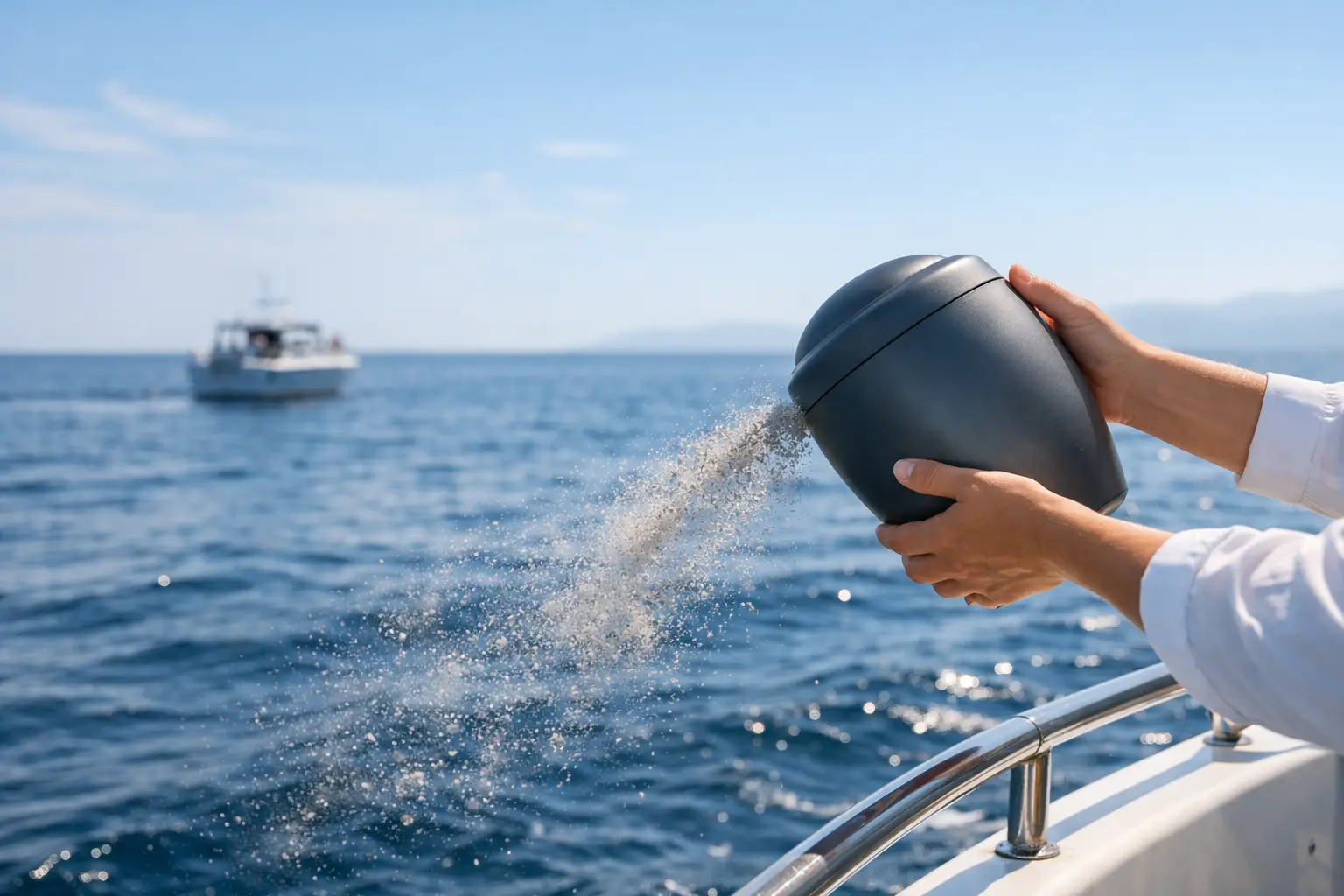
It also helps to talk beforehand about who will physically scatter the ashes. Sometimes one person takes that role. Sometimes several family members participate. Clarifying this early can avoid a difficult pause in the middle of the ceremony.
Consider the weather and timing
The Gulf can be beautiful and peaceful, but conditions matter. Wind, waves, and afternoon weather patterns can all affect the experience. A ceremony that sounds perfect on paper may feel very different if guests are dealing with rough water, heat, or sudden rain.
This is why flexibility matters. If possible, choose a provider that can talk honestly about the best time of day and what backup options exist if weather changes. Morning waters may be calmer on some days. Sunset can be gorgeous, but it may also bring stronger emotional intensity for some families. There is no perfect choice, only the choice that fits your group best.
If older adults, young children, or guests prone to motion sickness will be attending, mention that during planning. A thoughtful charter team can help you choose a route and timeframe that supports comfort without taking away from the significance of the moment.
Personal touches that make the farewell feel right
The most memorable ceremonies are often simple. A favorite song played softly. A short poem. A toast. A few fresh flowers. Time for silence while the boat drifts. These are small details, but they can help turn a difficult goodbye into a moment of peace.
At the same time, more is not always better. If you try to include every tradition, every relative’s preference, and every symbolic gesture, the ceremony can start to feel overplanned. It is worth asking one clear question throughout the process: does this help the family feel connected, or does it add pressure?
Some families like to bring framed photos for the ride out and back. Others want a guest book, matching flowers, or a shared color theme. These can be lovely touches, but the heart of the experience is still the same – being together on the water, honoring a life, and creating a memory that feels peaceful.
Should you use a private charter?
For most ashes scattering ceremonies, a private charter is the best fit. Privacy changes everything. It allows the family to grieve openly, speak freely, and move at their own pace without outside distractions.
It also gives you more control over the tone of the day. You can keep the experience intimate and quiet or include a more structured memorial with readings and music. On a private boat, the event belongs to your group. That matters when the occasion is deeply personal.
In Pensacola Beach, the setting itself can be part of the comfort. The open water, coastal light, and slower pace can bring a sense of calm that is hard to find on land. For families wanting both professionalism and warmth, Pensacola Beach Boat Charters can provide a private, respectful setting for ashes-at-sea ceremonies while handling the on-water details with care.
What to ask before you book
When you are ready to move forward, a few questions can make the decision easier. Ask whether the charter handles memorial services regularly, what is included in the trip, how long you will be on the water, and what happens if weather forces a change. You should also ask about boarding assistance, guest capacity, and any rules about flowers or personal items.
Pay attention to how the conversation feels. Families arranging memorial charters need more than availability and pricing. They need reassurance, clarity, and a sense that the crew understands the weight of the occasion. A good provider will make the process feel supported from the first call.
There is no way to make a farewell easy, but there is a way to make it feel cared for. When the setting is right and the planning is thoughtful, a scattering at sea can offer something families often need most – a gentle, beautiful moment to let go.