A quiet boat ride offshore can feel like exactly the right setting for a final goodbye. The water is open, the shoreline softens in the distance, and families often find a sense of peace that is hard to create on land. If you are asking can you scatter ashes offshore, the short answer is yes – but there are rules, timing considerations, and practical details that matter.
For families planning a memorial at sea, this is one of those moments where emotion and logistics meet. You want the experience to feel beautiful and personal, but you also want to know you are doing it the right way. That means understanding the legal basics, thinking through weather and boat setup, and choosing a charter team that can handle the day with care.
Can You Scatter Ashes Offshore Legally?
Yes, in the United States, you can generally scatter cremated remains at sea if you follow federal guidelines. The main rule comes from the Environmental Protection Agency. Human ashes should be scattered at least three nautical miles from shore. That distance is there to protect coastal waters and keep the process compliant with federal law.
There is also a reporting requirement. After the scattering takes place, the EPA expects the burial or scattering at sea to be reported within 30 days. If a full-body burial at sea is involved, different standards apply, but for cremated remains, the offshore distance and reporting are the key points most families need to know.
In Florida, local boating conditions, marina procedures, and shoreline traffic can also affect how a memorial is carried out, even when the federal rule is straightforward. The law may be simple on paper, but the actual experience still depends on the captain, the vessel, and the day on the water.
Why Offshore Matters
When people ask can you scatter ashes offshore, they are often really asking something deeper. They want to know whether they can choose a setting that feels peaceful, private, and worthy of the person they loved.
Offshore scattering offers that in a way few places can. It creates separation from the noise of the beach, the crowds, and the stop-and-start feeling of public spaces. Out on the Gulf, families often have room to pause, share stories, pray, play a favorite song, or simply sit with the moment.
There is also a practical reason the offshore setting matters. Ashes do not always behave the way people expect. Wind direction, boat movement, and water conditions can change the experience quickly. Being on a properly positioned vessel, with an experienced captain who knows how to orient the boat and guide the timing, makes a major difference.
What Families Should Expect on the Day
A memorial charter is not the same as a sightseeing cruise, even when both take place on beautiful water. The pace is different. The tone is more intentional. The best experience usually feels calm and gently guided rather than scripted.
Most families begin with a private departure and a run offshore to the proper distance. During that time, some talk freely while others prefer quiet. Once the boat reaches the chosen area, the captain will typically slow or stop based on conditions and explain what to expect before the ashes are released.
That release can be simple or ceremonial. Some families say a few words. Others bring flowers that are biodegradable and safe for the marine environment. Some want a champagne toast after the moment has passed, while others prefer a silent ride back to shore. There is no single right format. What matters is creating space for the people onboard to grieve, honor, and remember in their own way.
The Practical Side of Scattering Ashes at Sea
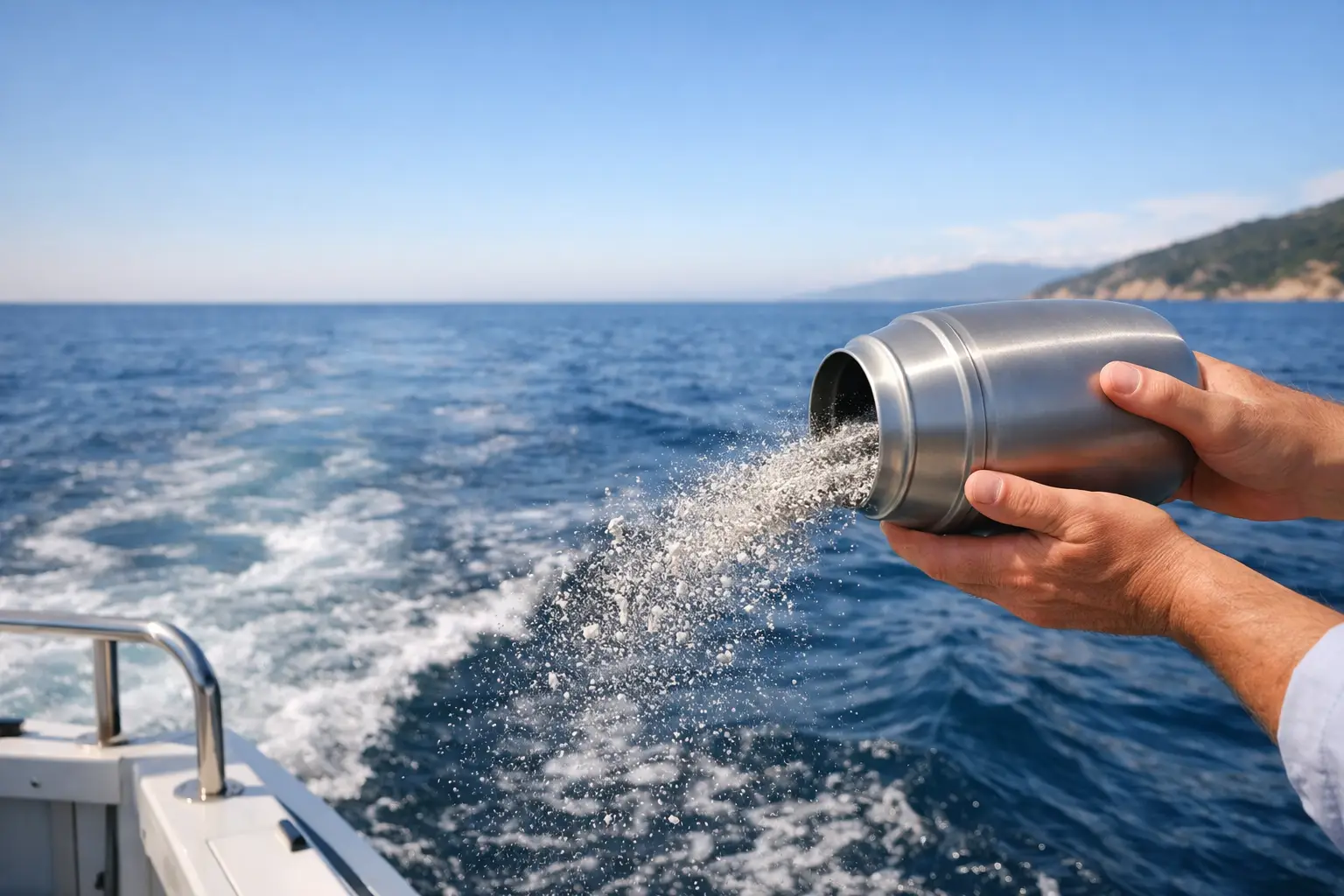
This is where thoughtful planning helps. Cremated remains are light, and even on a mild day, wind can shift them unexpectedly. That is why many captains recommend either a direct water release close to the surface or the use of a scattering tube designed for marine use.
Families sometimes imagine standing at the rail and pouring ashes into the air. It can be done, but it is not always the most graceful option. If the wind changes, the moment can become uncomfortable fast. A better approach is usually one that keeps the release controlled and close to the water.
Weather is another factor. Offshore memorials are beautiful in good conditions, but the Gulf deserves respect. Wind chop, storms, and rough seas can affect both comfort and safety. Sometimes the most caring decision is to reschedule for a calmer day. That can feel disappointing in the moment, but it often leads to a much more peaceful experience overall.
Choosing the Right Boat and Captain
For a memorial service, the boat matters for more than transportation. Comfort, privacy, and stability all shape how the day feels. A private charter gives families room to be together without outside distractions, and that privacy is often one of the biggest reasons people choose an ashes-at-sea ceremony in the first place.
An experienced captain also brings quiet confidence. They know how far offshore to go, how to position the vessel, how to account for wind, and how to keep the experience respectful without interrupting it. For families who have never done this before, that guidance is a relief.
This is also one of those occasions where hospitality matters. Clean seating, a well-kept boat, shade when needed, and a crew that understands the emotional weight of the trip can change everything. Pensacola Beach Boat Charters serves families looking for exactly that balance – a private, respectful memorial on the water that still feels comfortable and thoughtfully hosted.
Can You Scatter Ashes Offshore Without a Charter?
Technically, if you have access to a private boat and follow the law, yes. But this is where legal permission and a good experience are not always the same thing.
Managing navigation, offshore distance, weather checks, vessel handling, and the memorial itself can be a lot for one family to take on. If the person operating the boat is also grieving, it can add pressure at a time when people really want the freedom to be present.
A chartered memorial service removes that burden. Instead of worrying about route planning, safe positioning, or what happens if conditions change, families can focus on the reason they came. That is often worth far more than the boat ride itself.
Personal Touches That Feel Meaningful
The most memorable ash-scattering ceremonies are usually the simplest. A short reading, a favorite song played softly, a prayer, or a moment where each person says a few words can carry more meaning than an elaborate plan.
Photos can also be important, but this depends on the family. Some want the day documented. Others want complete privacy. It helps to decide that ahead of time so everyone onboard is comfortable.
If flowers are included, they should be natural and free of plastic wraps, wires, or anything that does not belong in the water. Some families also ask for the coordinates of the scattering location afterward. That small detail can become deeply meaningful, especially for loved ones who want a place they can return to in spirit.
The Answer Is Yes, With Care
So, can you scatter ashes offshore? Yes, and for many families, it is one of the most peaceful and fitting ways to say goodbye. The key is doing it legally, safely, and with enough care that the day feels like a tribute rather than a task.
When handled well, a sea memorial is more than a legal option. It becomes a beautiful final voyage – calm water, open sky, and a chance to honor someone special in a setting that feels as limitless as the memories they leave behind.
If this is the farewell you are considering, take your time, ask questions, and choose a crew that understands both the rules and the heart behind them. The right day on the water can bring comfort that lasts long after the shoreline comes back into view.