A child spotting a dolphin off the bow, digging toes into soft sand at a quiet sandbar, or watching the sky turn pink on the ride home can become the story they tell for years. The best way to create those moments is to know how to prepare kids for boating before you leave the dock. A little planning helps children feel secure, keeps parents relaxed, and leaves more room for the fun part – making memories together.
At Pensacola Beach Boat Charters, we believe a family outing should feel like a celebration, not a complicated checklist. Private time on the water gives your group room to set the pace, ask questions, snack when needed, and enjoy the Emerald Coast without rushing through the experience.
Start With the Right Kind of Boat Day
Kids do best when the outing matches their age, confidence level, and attention span. A toddler who loves the water may be thrilled by a shorter cruise with dolphins and calm scenery, while older children may have the patience for a sandbar stop, lunch cruise, or a longer day of swimming and exploring.
Before booking, think about what will make your children happiest. Is it wildlife? A chance to get in the water? Music, snacks, and a sunset? There is no single perfect charter length for every family. For first-time young boaters, a shorter private cruise is often a smart introduction. If your kids already love beach days and water play, a half-day or full-day family experience can give everyone more time to settle in and enjoy it.
Be honest about nap schedules, meal times, and heat tolerance. A beautiful afternoon can feel very long to a tired preschooler, especially in Florida sunshine. Choosing a departure time that works with your child’s normal rhythm is one of the easiest ways to keep the day joyful.
How to Prepare Kids for Boating Before the Charter
The night before, tell children what the day will look like in simple, positive terms. Explain that they will ride on a boat with a captain, wear a life jacket when asked, stay seated or hold an adult’s hand while the boat is moving, and listen when the captain gives instructions.
Avoid making boating sound scary or overly serious. Children take cues from adults. Calmly explain that boat rules help everyone have more fun, just like rules at a pool or playground. Let them know the captain is there to help the group have a safe, comfortable adventure.
It also helps to set expectations about the water. They may not be able to jump in whenever they want, and swimming depends on weather, location, and the captain’s direction. Framing this ahead of time prevents disappointment and makes it easier for kids to shift from one activity to the next.
For younger children, consider a quick practice session at home. Have them try on a life jacket so it does not feel unfamiliar. Teach them to say their full name and point out that they should stay where their parent or guardian can see them. These tiny rehearsals build confidence without turning the trip into a lecture.
Pack for Comfort, Not Just the Photo
The right gear makes a major difference, especially when kids get wet, hungry, chilly, or overstimulated. Families do not need to overpack, but a few thoughtful items can save the day.
Bring sunscreen and apply it before boarding, then reapply as needed. A hat and lightweight sun shirt add protection without making children feel bundled up. Sunglasses can help older kids, though they are easily misplaced, so a less expensive pair is usually the better choice.
A small bag with water, familiar snacks, wipes, and a change of clothes is worth having even on a shorter cruise. Kids often get hungry at surprising times, and dry clothes can turn around the mood after a splashy ride or sandbar stop. For younger children, include any comfort item they may need, such as a small stuffed animal or blanket, as long as you are comfortable bringing it near water.
If your child is prone to motion sickness, speak with their pediatrician before the trip about age-appropriate options. Do not wait until they feel sick to decide what to do. Fresh air, looking toward the horizon, light snacks, and avoiding a heavy meal right before departure can also help. Conditions vary by day, so flexibility matters more than promising a perfectly still ride.
Make Safety Feel Simple and Normal
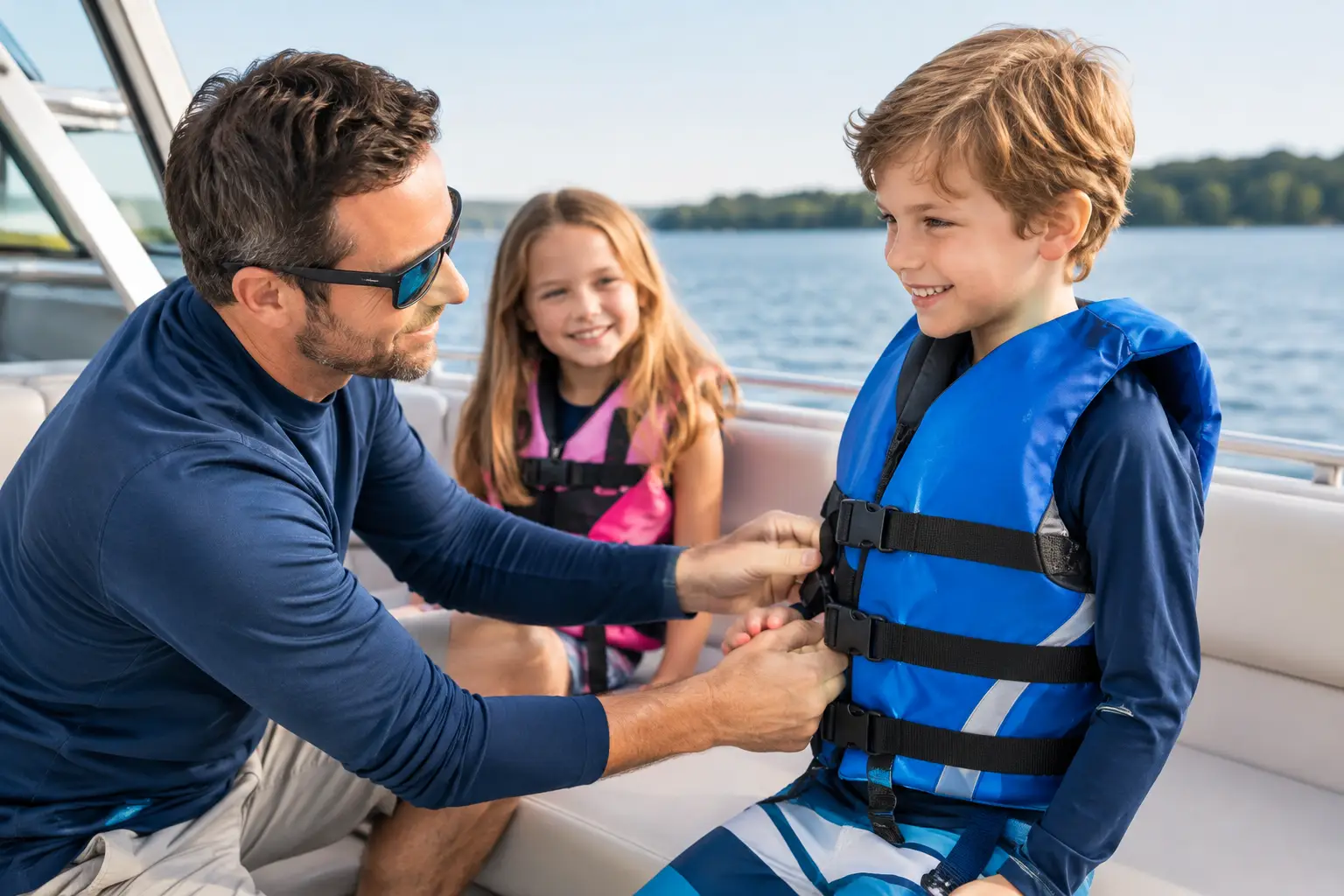
A properly fitted life jacket is not optional for children. It should be the right size and fit snugly without riding up around the ears or chin. Your captain will have required safety equipment onboard and can help answer questions, but parents should stay involved in making sure their own child is comfortable and secure.
Once underway, keep the safety message short and consistent: walking feet, hands inside the boat, and ask before moving around. Children do not need a constant stream of warnings. They need clear boundaries and adults who model them.
Assign one adult to actively watch each younger child, particularly around boarding, docking, swimming, and sandbar time. This is especially helpful for multigenerational groups, where everyone assumes someone else is keeping an eye on the little ones. Grandparents, friends, and older siblings can be wonderful helpers, but a designated adult avoids confusion.
Weather also deserves respect. Wind, rain, heat, and water conditions can change a plan. A great charter experience is not about forcing every activity onto the schedule. Sometimes the captain’s local knowledge leads to a more sheltered route, a different swimming stop, or a cruise focused on scenery and wildlife instead. That adjustment is part of taking care of your family.
Keep Children Engaged Without Overplanning
The water already provides plenty to see. Invite kids to look for dolphins, pelicans, jellyfish, passing boats, and changing colors along the shoreline. Give them a simple mission, such as spotting three kinds of birds or choosing their favorite view. These small games encourage curiosity without requiring screens or elaborate entertainment.
Older children often enjoy having a little responsibility. They can help gather towels, choose a playlist at an appropriate volume, take photos, or learn a few basic boating terms from the captain. Letting them participate makes the outing feel like an adventure rather than something arranged only for adults.
At the same time, leave breathing room. Families sometimes try to fill every minute with swimming, photos, food, sightseeing, and activities. The most magical parts of a private boat day are often unplanned: a quiet moment watching the wake, a child laughing at sea spray, or everyone pausing as the sun lowers over the Gulf.
Plan for the Ride Home, Too
A successful boat day can leave kids happily exhausted. Keep a towel and dry clothes handy for the car, and have an easy meal plan rather than adding another big decision after the charter. If the kids had a wonderful time, ask them about their favorite moment while it is still fresh. Their answers may surprise you.
Take a few photos, but do not spend the whole trip behind a phone. The goal is not to document every second. It is to be present for the birthday smiles, family laughter, and sunlit water that made the day feel special.
When you are ready to give your family a day that feels easy, personal, and full of Gulf Coast magic, book a private charter and let the kids see why Pensacola Beach is paradise from the water.