A calm morning on the water can make even the hardest goodbye feel a little gentler. If you are planning a memorial at sea, this ashes scattering ceremony etiquette guide will help you create a respectful, personal experience that honors your loved one without adding stress to an already emotional day.
Scattering ashes on the water is beautifully simple, but simple does not always mean easy. Families often arrive with different emotions, different beliefs, and different ideas about what the ceremony should feel like. Good etiquette is less about rigid rules and more about care – caring for the person being remembered, caring for the guests onboard, and caring for the setting where the farewell takes place.
What matters most in an ashes scattering ceremony etiquette guide
The best memorial ceremonies feel personal, not performative. That means etiquette starts with intention. Before you think about flowers, music, or readings, decide what kind of tone fits the person you are honoring. Some families want a quiet, reflective moment with only immediate relatives. Others want stories, shared laughter, a favorite song, and a more celebratory sendoff.
Neither approach is more correct. What matters is that everyone understands the plan ahead of time. A ceremony tends to feel more peaceful when guests know whether they are attending something formal, spiritual, casual, or family-led. That clarity prevents awkwardness and helps people show up in the right frame of mind.
It also helps to choose one person to gently lead the flow. This does not need to be a clergy member or professional officiant. It can be a family member, close friend, or captain-guided host who welcomes everyone, explains what will happen, and creates a little structure. When emotions are running high, even a simple outline can be comforting.
Before the day: planning with respect and practicality
A meaningful ceremony starts long before the boat leaves the dock. The first courtesy is making sure everyone who should be included knows about the service in time to participate. In some families, that means inviting a small private group. In others, it means letting a wider circle know and explaining that space onboard may be limited.
That limitation matters more than people expect. A private boat memorial is intimate by nature, and not every charter can safely carry every extended relative, friend, and neighbor. If you need to keep the guest list small, it is completely appropriate to say so kindly and clearly. Some families choose to hold a separate reception or remembrance gathering on land for those who cannot attend the scattering itself.
You will also want to think through logistics that affect comfort. Let guests know what to wear, what the weather may feel like on the water, and whether they should expect a short cruise or a longer private charter. Soft, practical clothing usually works best. Heels, restrictive outfits, and anything that does not handle wind well can become a distraction.
This is also the time to discuss any cultural or religious customs that matter to the family. Some traditions call for prayers, specific readings, flowers, or moments of silence. Others may avoid certain gestures entirely. If multiple branches of a family have different expectations, a little conversation ahead of time can spare hurt feelings later.
Ashes scattering ceremony etiquette on the boat
Once everyone is onboard, the tone should feel unhurried. Memorials at sea are not ordinary sightseeing cruises, even if the setting is stunning. People need a few moments to settle in, breathe, and transition into the experience.
One of the kindest things you can do is begin with a brief welcome. Thank guests for coming, acknowledge the reason for gathering, and explain the order of events. Something as simple as saying, “We’ll ride out to a quiet spot, share a few words, scatter the ashes, and then take a moment together before we head back,” gives everyone a sense of ease.
Phones deserve special consideration. Families vary here, and it depends on the tone you want. Some want photos for remembrance. Others prefer no phones at all during the ceremony. The polite move is to decide in advance and say it out loud. That way no one has to wonder whether taking pictures is comforting or intrusive.
Children can absolutely be part of an ashes-at-sea service, and often their presence brings warmth to the day. The key is setting expectations. Let them know what is happening in age-appropriate language, and give them a simple role if it feels right, such as placing a flower in the water or sharing a memory. If a child becomes restless or emotional, that is not a breach of etiquette. It is just part of real family life.
How to handle the actual scattering respectfully
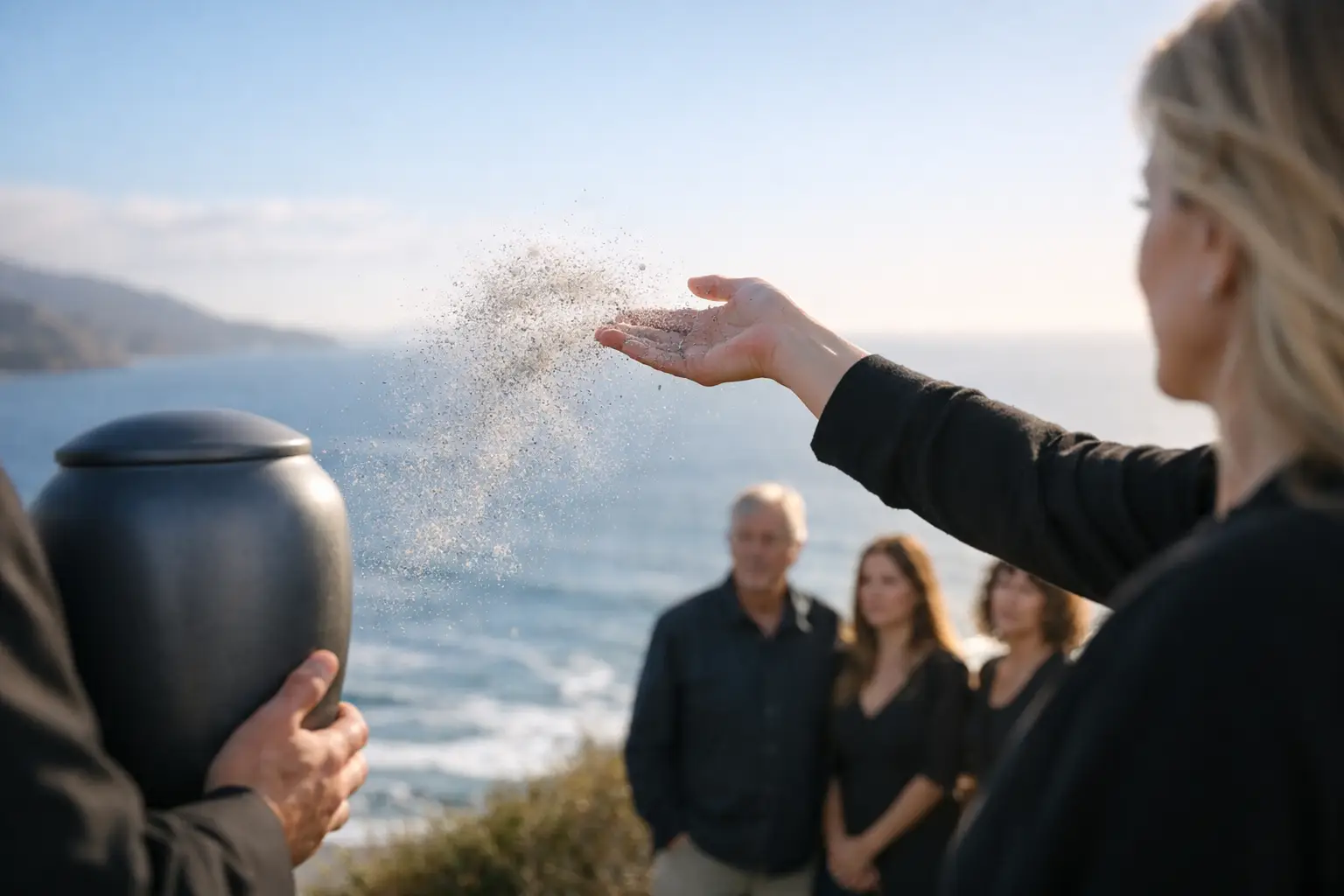
The moment of scattering is where practical etiquette matters most. Ashes behave differently on the water than many people imagine. Wind direction, boat position, and current all affect the experience, so listening closely to the captain’s guidance is essential.
This is not just about safety. It is also about preserving the dignity of the moment. Nobody wants a preventable mishap to interrupt a farewell. A professional crew can position the boat thoughtfully and explain how to release ashes in a way that feels smooth and respectful.
If more than one person wants to participate, decide the order before the boat stops. That avoids confusion in an emotional moment. Some families invite each person to say a few words before the ashes are released. Others keep silence and let the water speak for itself. Again, there is no single right script. The most gracious approach is the one that feels true to the person being remembered.
Flowers are common, but they should be used thoughtfully. Loose petals are often a better choice than full arrangements, especially on the water. Natural, biodegradable elements tend to suit the setting best. It is wise to avoid anything plastic, wired, or wrapped that could leave debris behind.
Supporting guests through an emotional experience
A memorial charter often brings together people who grieve differently. One guest may want to share stories. Another may stay quiet the entire time. Someone may cry openly, while someone else may seem composed and even cheerful. Good etiquette leaves room for all of it.
That means avoiding pressure. No one should feel required to speak, pray aloud, or take part in the scattering if they are not comfortable. Offering the opportunity is generous. Expecting it can feel heavy.
It is also wise to make space for joy. On the water, memories often come quickly – favorite beach days, fishing trips, family vacations, old jokes. Laughter is not disrespectful in a memorial setting. For many families, it is part of the healing. The right balance depends on the loved one and the group, but warmth often belongs in the ceremony just as much as sorrow does.
If you are hosting, pay quiet attention to those who may need extra care. Elderly relatives, grieving spouses, and anyone uneasy on boats may benefit from a comfortable seat, a bottle of water, and reassurance about what comes next. Small acts of hospitality matter even more on a day like this.
Special etiquette for ashes-at-sea ceremonies in Pensacola Beach
A water memorial carries practical responsibilities alongside emotional ones. Local conditions, weather, and boating regulations shape what is possible, so working with an experienced private charter matters. Pensacola Beach Boat Charters helps families create ceremonies that feel peaceful and personal while also handling the on-water details with professionalism and care.
This is one of those times when planning support is not just convenient – it is genuinely helpful. Families should not have to worry about navigation, timing, or whether the boat is positioned correctly while saying goodbye. A calm, capable captain allows everyone else to stay present in the moment.
It also helps to build a little flexibility into the day. Weather on the Gulf Coast can change, and water conditions may influence the route or timing. That does not ruin the experience. In many cases, it simply means adapting so the ceremony remains safe and comfortable.
After the ceremony: what feels appropriate
Many families are unsure what to do after the ashes have been scattered. There is no rule that says you must head straight back in silence, and there is no rule that says you should turn the rest of the charter into a celebration. It depends on the family, the loved one, and the mood onboard.
Some prefer a quiet cruise back to shore. Others share a toast, tell stories, or play meaningful music softly in the background. If food or drinks are part of the plan, they should feel intentional rather than festive for the sake of festivity. A memorial at sea can hold both reverence and comfort.
Later, it is thoughtful to share photos, a reading, or the coordinates of the location with family members who could not attend, if that feels appropriate. For some, that small follow-up becomes a treasured keepsake.
The most graceful ceremonies are rarely the most elaborate. They are the ones where people feel cared for, the loved one’s spirit feels close, and the setting gives everyone a little room to breathe. If you approach the day with tenderness, clarity, and respect, the water has a way of carrying the rest.