Skip to content
Some families know exactly what they want to say on the water, right up until the moment arrives and words disappear. That is usually when an ashes at sea example becomes helpful – not because a memorial should sound scripted, but because having a simple starting point can make a deeply emotional day feel a little more manageable.
An ashes-at-sea ceremony is personal by nature. Some families want prayer and tradition. Others want quiet reflection, favorite songs, or a few honest words that sound like the person they loved. There is no single right way to do it. The best ceremony is the one that feels respectful, calm, and true to the life being remembered.
Why an ashes at sea example helps
When you are planning a memorial, you are often making decisions while grieving. That can make even small choices feel heavy. An example gives you structure. It helps you picture the flow of the ceremony, decide who will speak, and understand how long the moment may take.
It also removes some pressure. Families sometimes worry they need to say something profound. In reality, the most memorable words are often the simplest. A short statement of love, gratitude, and goodbye can carry more meaning than a long formal reading.
For a private charter memorial, that simplicity matters. The water already brings a sense of space and peace. The ceremony does not need to be complicated to feel beautiful.
A simple ashes at sea example
If you want a short and respectful script, this is a good place to begin:
“We gather here today to honor and remember a life deeply loved. We give these ashes to the sea with gratitude for the time we shared, the memories we carry, and the love that remains with us. May these waters hold this farewell gently, and may we leave here with peace in our hearts. You are loved, you are remembered, and you will always be with us.”
That example works because it is warm, clear, and not tied to any one faith tradition. It can be read by a spouse, child, sibling, friend, or captain if the family prefers support during the moment.
If you want to personalize it, add a few lines about the person. You might mention their laugh, their military service, their love of fishing, or how much they loved being near the Gulf. Those details are often what make the ceremony feel real.
Ashes at sea example for different ceremony styles
Not every family wants the same tone. Some want spiritual language. Others want something more conversational. Here are a few ways to shape the wording.
Faith-based example
“Today we return these ashes to the sea, trusting in God’s care and giving thanks for a life that blessed so many. We pray for peace, comfort, and strength for all who loved them. May this farewell be filled with grace, and may their soul rest in eternal peace.”
This style is appropriate for families who want prayer to be central. Some may also choose to include a scripture reading, hymn lyrics, or a brief moment of spoken prayer before releasing the ashes.
Casual and personal example
“You loved the water, the sunshine, and being surrounded by the people who mattered most. Today we bring you here to say goodbye in a place that feels right. Thank you for the stories, the laughter, and the love. We will miss you, and we will carry you with us every day.”
This version feels natural for families who want the ceremony to sound like them, not overly formal or ceremonial.
Military or service-centered example
“With honor, respect, and gratitude, we remember a life of service and commitment. We commit these ashes to the sea in recognition of duty, sacrifice, and enduring love. May these waters carry this farewell with dignity, and may their memory remain a blessing to all who knew them.”
This can be especially meaningful if the person served in the military, law enforcement, or another role defined by duty.
How a memorial at sea usually flows
Most families feel better when they know what to expect. A private charter memorial often begins with a quiet ride to the selected area offshore. That travel time gives everyone a chance to settle in, share memories, and prepare emotionally.
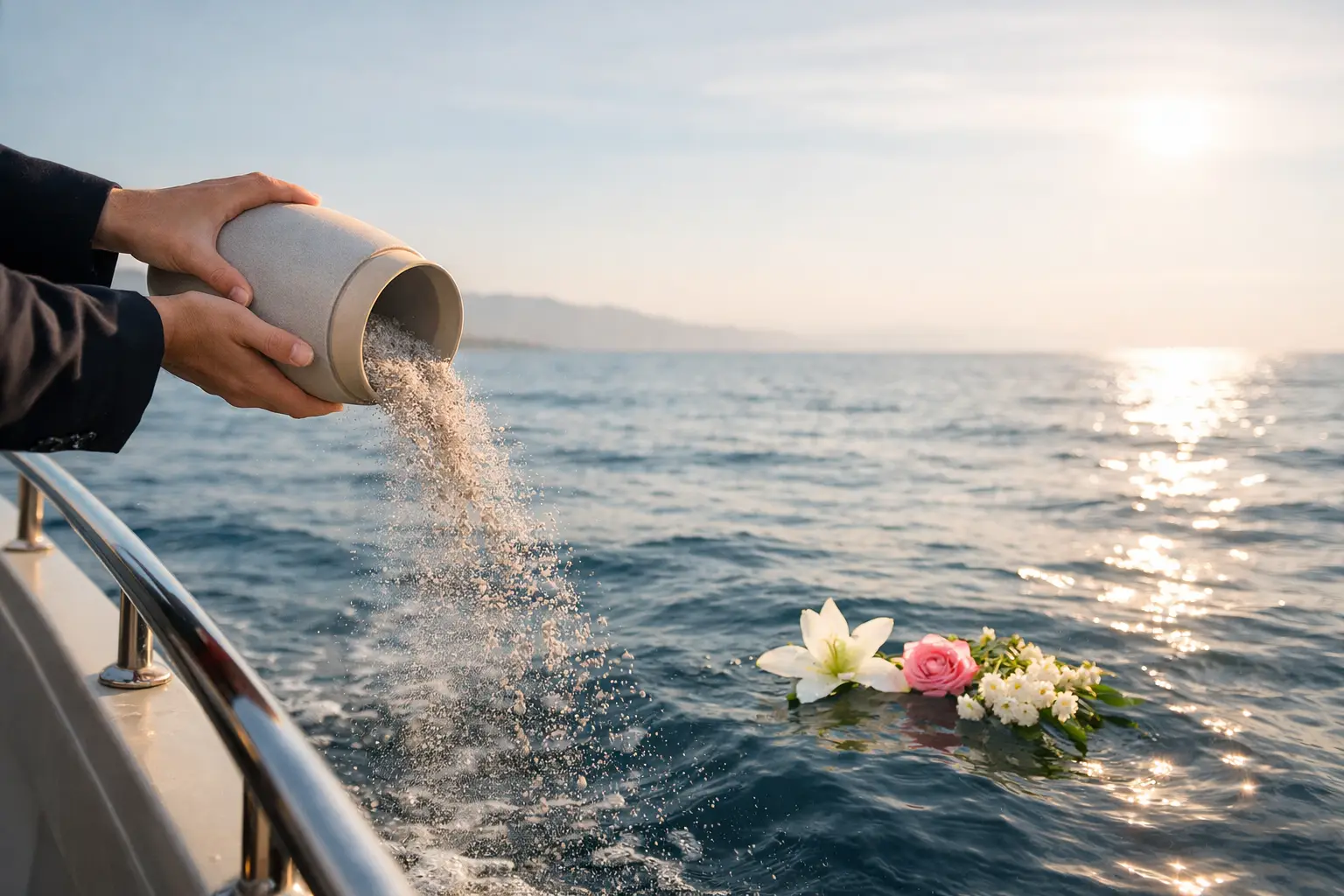
Once the boat is positioned, the captain will pause and create space for the ceremony. Usually someone says a few words, followed by the release of ashes. Some families add flowers, a reading, music played softly from a phone speaker, or a moment of silence. Others keep it very simple and let the sound of the water carry the moment.
After the release, many families stay in place for a few minutes. That pause matters. It gives people a chance to cry, pray, reflect, or simply breathe. There is no need to rush away from the moment.
What to include if you are writing your own words
If you are creating your own ceremony, think in three parts: why you are gathered, what you want to remember, and how you want to say goodbye. That is usually enough.
You do not need polished language. You just need something honest. A strong personal tribute might include the person’s name, what they meant to the family, one or two vivid qualities, and a final farewell. If several people want to speak, keep each part short so the ceremony stays calm and cohesive.
Practical details families often overlook
Emotion comes first, but planning matters too. Sea conditions, wind, timing, and the type of urn or container can all affect the experience. It helps to work with a professional captain who understands both the logistics and the sensitivity of the occasion.
Some families assume a memorial at sea will feel cold or complicated. In practice, a well-planned private charter often feels more peaceful than a crowded land-based gathering. You have privacy, open space, and the ability to shape the ceremony around your family rather than fitting into someone else’s schedule.
There are also trade-offs. A boat memorial is beautiful, but weather can affect timing. Some relatives may be uncomfortable on the water, especially if they are older or prone to motion sickness. That does not make the choice wrong. It just means the planning should be thoughtful. Morning conditions may be smoother, a shorter charter may be easier for some guests, and clear communication ahead of time can reduce stress.
Making the ceremony feel personal without making it complicated
The most meaningful touches are often the simplest. A favorite flower, a small framed photo brought onboard, a handwritten letter read aloud, or the person’s favorite song can change the entire feel of the day.
If the person loved Pensacola Beach, spent time fishing the Florida Gulf Coast, or simply felt most at peace near salt air, the setting itself becomes part of the tribute. The water does a lot of the work. You do not need to overproduce the moment.
Families also ask whether children should attend. That depends on the child and the family dynamic. For some, being included helps them understand and participate in the goodbye. For others, it may feel too emotional or too long. A private charter gives you flexibility, which is one reason it works so well for memorials with different age groups and comfort levels.
Choosing the right support on the water
This is not the kind of day where you want a generic boat ride. You want a captain and charter team who understand timing, privacy, and how to guide the experience without taking it over. Professionalism matters, but warmth matters too.
That balance is what makes a memorial charter feel supportive rather than transactional. Comfort amenities, a clean and stable boat, and a responsive crew can make a difficult day much easier. When a family does not have to manage every detail, they are free to be present with one another.
For families planning a private memorial on the water, Pensacola Beach Boat Charters can help create a respectful experience that feels personal from start to finish. If you are ready to arrange a ceremony or want help talking through the details, book your charter at https://pensacolabeachboatcharters.com/booking.
When an example is enough and when you may want more
Sometimes a short ashes at sea example is all you need. Other times, families want help shaping a fuller ceremony with multiple readers, music, flowers, or a specific route. Neither approach is better. It depends on the person being honored and the emotional needs of the family.
If you are stuck, keep this in mind: nobody remembers whether the wording was perfect. They remember whether the moment felt sincere. A calm ride, kind guidance, and a few true words are often more than enough to create a beautiful farewell.
When the time comes, let the day reflect the life. The sea has a way of holding both grief and gratitude at once, and sometimes that is exactly what families need.